
The bills were also part of a discussion held at Temple on Oct. 1, featuring chief sponsor, State Rep. and now U.S. Rep.-Elect Chris Rabb.
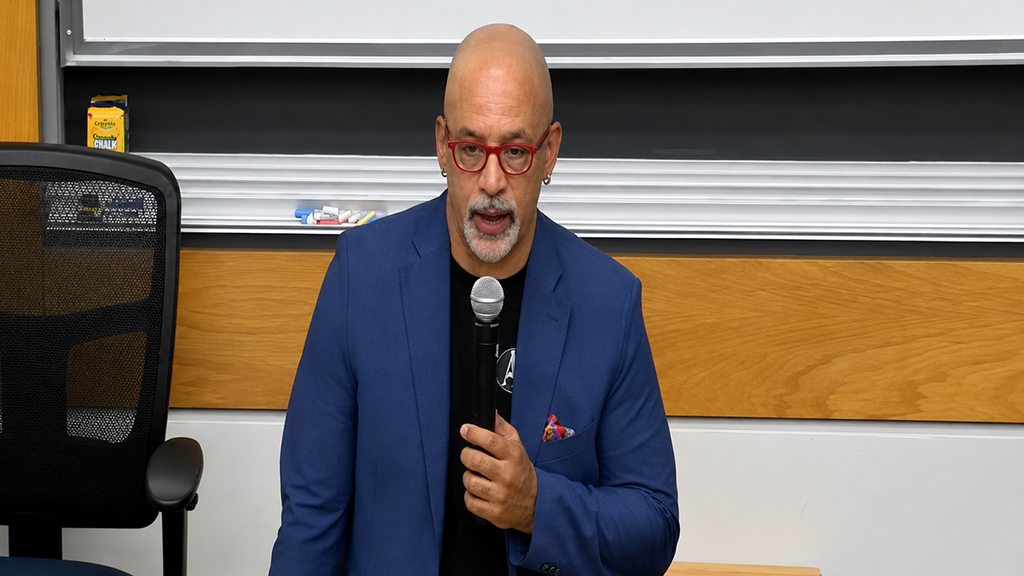
The importance of local news is not a newfound discovery for Pennsylvania State Rep. Chris Rabb, it’s something that’s been part of his family for generations. His great-great grandfather is John H. Murphy Sr., who founded the Baltimore Afro-American back in 1892. It’s the second-oldest African-American newspaper in the country – The Philadelphia Tribune is the oldest – but its longest-running family-owned African-American newspaper, as it is still run by members of Rabb’s family.
“Black folk were invisible — our pain, our promise, our treasure — was not being appreciated,” Rabb said of Murphy’s motivation to start the paper during a talk at Temple on Oct. 1.
That history and importance has, in part, shaped Rabb’s work — from his time in the U.S. Small Business Administration during the Clinton years to his fight on campaigns for net neutrality as a professor and prominent blogger, and finally, what could be his last act in the Pennsylvania Legislature. Rabb was elected to serve Philadelphia in the United States Congress on November 3.
Two of Rabb’s bills to support local news and cultivate better local media access in the state advanced out of the Pennsylvania House on Wednesday, Oct. 21.
House Bill 2047 would establish the Local News Fellowship Program, a state-backed fellowship program to place early and mid-career journalists in community newsrooms across Pennsylvania. House Bill 2048 would create a Pennsylvania Civic Information Consortium, nonprofit that invests in local reporting projects to give Pennsylvanians civic information that is vital to their daily lives. That information could include coverage of municipal governments, local school board meetings, environmental health, and more.
“People need to know what’s happening around them,” Rabb said after the legislation passed the Pa. House. “These bills are a major step forward for an informed Pennsylvania, and support reliable, independent local news that will help people contribute to and participate in our democracy.”
The bills come at a time when local news outlets in Pennsylvania and nationwide face an ever-growing struggle to continue operating as funding becomes more scarce. In a memo to fellow lawmakers when the bills were introduced, Rabb called the collapse of local news not just an industry crisis, but “a democratic and community crisis.”
“Layoffs and corporate consolidation have hollowed out independent newsrooms across Pennsylvania, leaving too many residents in the dark about what’s happening in their streets, schools, and halls of power,” reads part of the memo.
Rabb also points a finger at recent federal cuts to public media as adding to the crisis.
“Especially in rural regions where public broadcasters are often the only remaining local news providers,” states the memo.
It also cites Northwestern’s Local News Initiative, which found that 17 of Pennsylvania’s 67 counties only have one local news source.
“Local communities, be they urban, suburban or rural, require access to reliable, routine information to thrive,” said Letrell Crittenden, director of the Center for Community-Engaged Media at Temple University. “Cutbacks and closures of local newsrooms have significantly limited access to essential information. This bill provides the resources required to help inform our local communities, and its passage is an important first step toward serving the information needs of Pennsylvania’s residents.”
Rabb’s two bills are modeled after legislation already enacted in New Jersey and California to try to fill local civic information needs.
The Pennsylvania Civic Information Consortium in HB 2048 is modeled after the New Jersey Civic Information Consortium. Since its creation through legislation in 2021, the consortium has invested more than $15 million in local reporting projects dedicated to spreading civic information, and published more than 17,000 stories.
HB 2047’s Local News Fellowship is based on the California Local News Fellowship program run out UC Berkley’s Graduate School of Journalism. To date, the program has invested more than $35 million to place more than 100 fellows at more than 100 newsrooms across California to meet local civic information needs.
Rabb’s legislation was one of many topics discussed at an event held at Temple on Oct. 1 all about the crossover between civic information and journalism. Rabb was also the featured speaker and a panelist. The event was co-sponsored by Temple’s Center for Community-Engaged Media and a number of organizations that also supported Rabb’s legislation, including Free Press Action, Common Cause Pennsylvania, and Media Inequality and Change (MIC).
One of the panelists, Temple Professor Sarah Alvarez, spoke about the important role of journalists to give communities vital civic information despite some of the industry’s rigid norms.
“We’re often afraid of civic participation. We don’t want to tell people what to do. We shouldn’t, but that doesn’t mean we should make their participation more difficult,” said Alvarez. “There’s ways we can be ethical, and also help people act.”
Philip Hensley-Robin, another panelist and executive director of Common Cause Pennsylvania, pointed to Rabb’s bills as a key first step to creating better media democracy and an information landscape more in-tune with communities’ actual needs.
“We need innovative, new models to fund the journalism that we desperately need and deserve,” said Hensley-Robin. “Treat it as the basic, fundamental civic infrastructure that it is.”
The bills have been referred to a committee in the Pennsylvania Senate, and the earliest they could get a full vote in the chamber is during the next scheduled legislative session for Pennsylvania lawmakers in January 2027.